




Compare products Delete all products
You can compare a maximum of 3 products
Schleich Therizinosaurus
Of all animals that ever lived on earth, the Therizinosaurus probably had the longest claws. It used them to dig, grasp, pierce, and peel off bark. It lived towards the end of the dinosaur age, together with other herbivores such as the ...
Schleich Mosasaurus
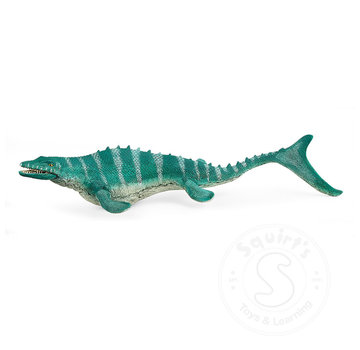
The movable jaw of the Mosasaurus from Schleich® DINOSAURS contains many pointy teeth. When hunting prey such as fish or turtles, the dinosaur opened its mouth very wide and bit down powerfully. The shape of its teeth means that it probably didn’t...
Schleich Brachiosaurus
Brachiosaurus translated means “arm lizard”. It acquired the name, because its front legs were significantly longer than its hind legs. As such, its long neck pointed automatically upwards and it could eat taller plants with less effort.
Safari Pachycephalosaurus
The distinctive dome-headed Pachycephalosaurus is believed to have used its thick skull during combat with others of its species, perhaps while trying to impress potential mates. They may have butted their heads together, or slammed them into...
Schleich Pachycephalosaurus
The Pachycephalosaurus from Schleich® DINOSAURS is the largest beaked, herbivorous dinosaur ever discovered. It grew to around 4-5 m in length, 450 kg, moved on two legs and lived in the Late Cretaceous period in North America. Its strong domed ...
Schleich Ceratosaurus - Retired
The Ceratosaurus from Schleich® DINOSAURS was a carnivorous dinosaur that lived around 150 million years ago in the Late Jurassic period. Two bumps at the eyes and a large horn on the nose were made of bone. They were used either in combat or to...
Schleich Brontosaurus
Explore the prehistoric world with this Brontosaurus (15027), a fun, educational toy figurine from Schleich! This toy is detailed and handheld, and is ideal for hours of imaginative play.
Schleich Kaprosuchus
The Kaprosuchus from Schleich® DINOSAURS was named after its teeth and head shape: its name means “boar crocodile.” The animal lived in the Late Cretaceous period, probably primarily on land where it hunted small animals. So far only one skull of the ..
Schleich Velociraptor
Velociraptors were likely very intelligent dinosaurs that hunted in packs. Although they were only 60 cm in height, these carnivores were able to overpower significantly larger prey. These dinosaurs reached speeds of up to 65 kilometres an hour ...